
The “Tiny House Movement” has transitioned from a niche social experiment into a global architectural phenomenon. For many, the appeal lies in the financial freedom of living mortgage-free or the environmental benefits of a smaller carbon footprint. However, the true magic of this lifestyle isn’t found in the exterior aesthetics or the portability of a house on wheels; it is found in the interior experience. Stepping inside a tiny house—typically defined as a dwelling under 400 square feet—requires a fundamental shift in how one perceives space, possessions, and daily rituals.
The Architecture of Efficiency: Making Every Inch Count
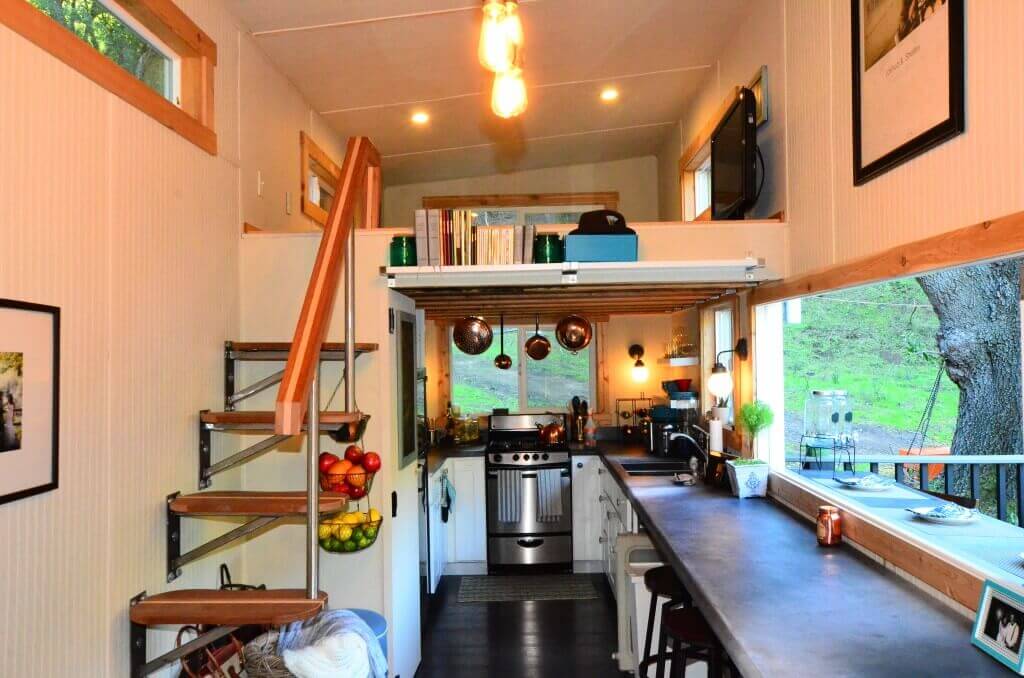
The interior of a tiny house is a masterclass in spatial geometry. Unlike traditional homes where square footage is often wasted in hallways or oversized guest rooms, every cubic inch of a tiny house must serve a purpose. This is often referred to as “functional density.”
To achieve this, designers utilize vertical space. High ceilings are almost universal in tiny house designs, preventing the space from feeling claustrophobic. By lifting the gaze upward, the room feels larger than its footprint suggests. This verticality also allows for the inclusion of sleeping lofts, which separate the resting area from the living area, creating a psychological distinction between “day” and “night” zones.
Storage in a tiny house is rarely a standalone closet. Instead, it is integrated into the structural elements of the home. You will find drawers tucked into the risers of staircases, pull-out pantries hidden behind refrigerators, and “toe-kick” drawers located at the base of kitchen cabinets. This clever engineering ensures that while the house is small, it does not have to be cluttered.
The Psychology of the Interior Environment
Living inside a tiny house changes the way a person interacts with their surroundings. Because space is limited, there is a heightened awareness of one’s environment. This leads to a design philosophy often centered around “biophilic” elements—bringing the outdoors in.
Large windows are a hallmark of tiny house interiors. They serve a dual purpose: providing essential natural light to keep the space airy and offering a visual “expansion” of the room into the surrounding landscape. When you can see the horizon from your kitchen sink, the four walls around you feel less like a constraint and more like a frame for the world outside.
Furthermore, the materials used inside tiny houses tend to be of higher quality than those in mass-produced suburban homes. Because the volume of material needed is so low, homeowners can often afford reclaimed wood, natural stone countertops, or hand-forged hardware. This creates a tactile, sensory-rich environment that feels luxurious despite its size.
The Kitchen and Bath: Innovations in Scaling Down
In a standard home, the kitchen and bathroom are often the largest consumers of space. Inside a tiny house, these areas are redesigned with a focus on “multitasking” appliances and compact fixtures.
The kitchen, or “galley,” is often the heart of the home. Modern tiny houses feature induction cooktops that can be covered with a cutting board when not in use, adding to the available counter space. Deep, single-basin sinks are preferred over double basins to allow for washing large pots while maintaining a small footprint.
The bathroom, often a source of anxiety for those new to tiny living, has seen incredible innovation. From high-tech composting toilets that eliminate the need for complex black-water plumbing to “wet baths” where the entire room serves as the shower stall, these spaces are designed for maximum utility. High-end ventilation systems are critical here, as moisture management is vital in a small, airtight volume of air.
Furniture That Evolves: The Rise of Transformable Design
Static furniture is a luxury that tiny house interiors cannot always afford. Instead, the “living room” often features furniture that evolves throughout the day. A sofa might hide a trundle bed for guests, or a dining table might fold down from the wall (a Murphy table) to clear the floor for morning yoga.
This “origami architecture” allows a single 100-square-foot room to function as a home office, a dining room, and a media center. The key to successful tiny living is the ability to transition between these modes with minimal effort. If it takes twenty minutes to set up a bed, the design has failed; if it takes twenty seconds, the house is a success.
The Challenges of Intimacy and Privacy
While the benefits are many, the reality of living inside a tiny house—especially for couples or families—presents unique social challenges. Privacy is the most significant hurdle. Sound travels easily in a small space, and there are few places to retreat for a moment of solitude.
Successful tiny house dwellers often incorporate “visual privacy” tricks. This might include heavy curtains for the loft or “bump-out” window seats that allow one person to feel tucked away even if they are in the main room. Living small requires a high level of communication and a shared commitment to tidiness, as a single pair of shoes left in the middle of the floor can become a major obstacle.
Conclusion
The interior of a tiny house is a testament to the idea that “less” can indeed be “more.” By stripping away the excess, these homes highlight the essentials: light, warmth, comfort, and connection. Inside a tiny house, you are not just living in a smaller version of a big house; you are living in a space that has been intentionally curated to support a specific lifestyle. It is an environment that demands mindfulness and rewards it with a sense of cozy, uncluttered peace. As we continue to rethink our relationship with the planet and our possessions, the lessons learned from the inside of these small dwellings offer a compelling blueprint for the future of housing.